First, it’s important to note that dry farming is not a new idea or practice. Dry farming is practiced across the globe, from the Mediterranean Basin to the American Southwest, from East Africa to South Asia. These living traditions continue to inform our understanding of water resilience in agriculture today.
The term “dry farming” is a bit of a misnomer. It does not mean growing crops without water. In our context in the Pacific Northwest, we define dry farming as crop production without irrigation during the dry season, relying on the soil itself as a water storage vessel that captures winter rains and holds moisture for crops to access through the dry months.
Dry farming means prioritizing agricultural resilience, where stable, economically viable farms operate with limited water to sustain growers, communities, and the natural world.
It means paying close attention to soil depth, texture, and water-holding capacity. Selecting varieties that have characteristics that allow them to tap into that deep reservoir, or those that are known to perform under drought conditions. Adjusting plant spacing, timing, and weed management to reduce competition and stress.
The practice of dry farming requires presence, and a willingness to learn what the land and the crops are telling you.
As water scarcity intensifies across the western United States, dry farming offers one potential, place-based pathway toward agricultural resilience, grounded in working with the land rather than against it.
So…how does it work?
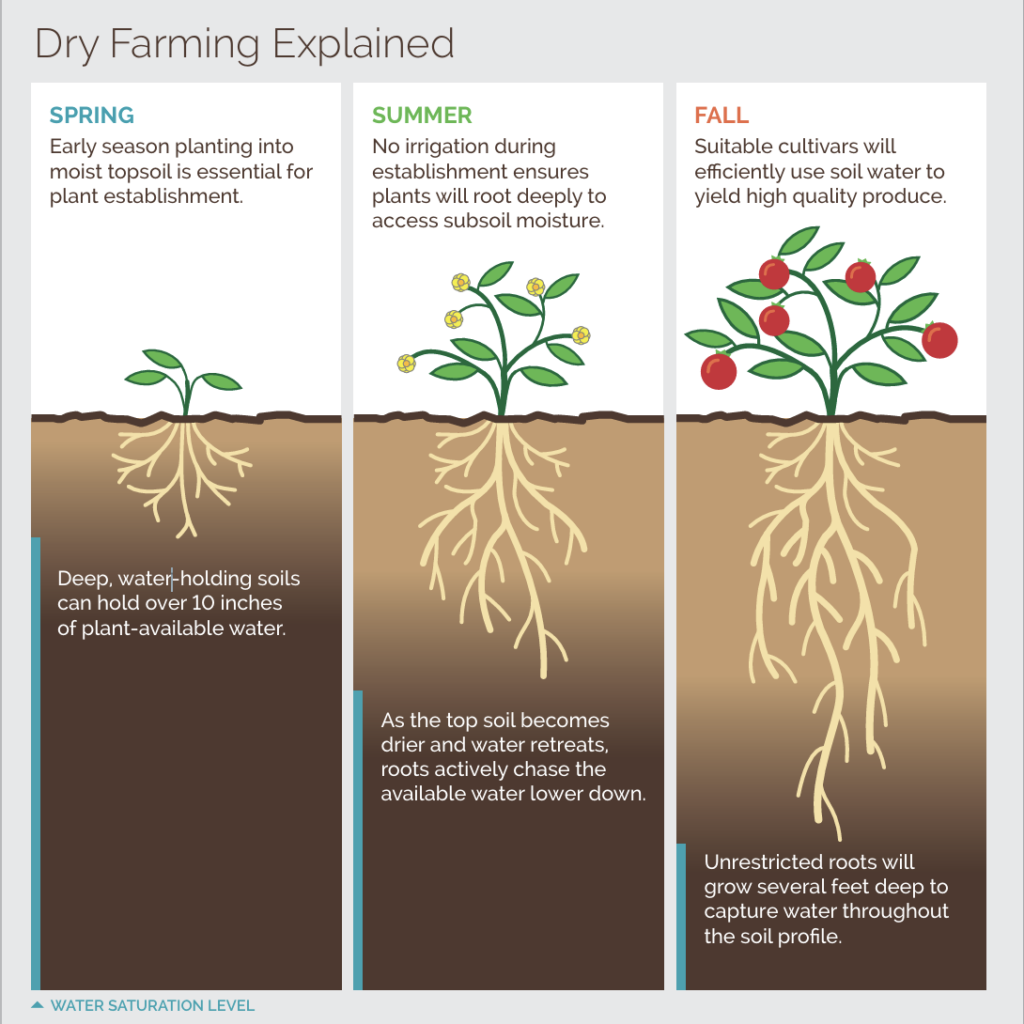
Dry Farming Explained
Dry farming works by encouraging plants to root deeply into the soil, accessing moisture stored from winter rainfall rather than relying on irrigation. Early planting into moist topsoil gives roots a head start. As the soil surface dries out through summer, roots chase moisture deeper. By fall, well-rooted plants draw on subsoil moisture to produce high-quality, flavorful produce.
Practices That Support Dry Farming
Dry farmers select sites with deep soil and strong water-holding capacity, then employ a range of techniques to conserve soil moisture throughout the growing season, including:
- Deep soils
- Time matters
- Crop and varietal selection
- Lower planting density
- Conserve moisture
- Soil Health
- Promoting deep rooting
- Diligent weed control

New to dry farming?
Explore the resources below to get started:
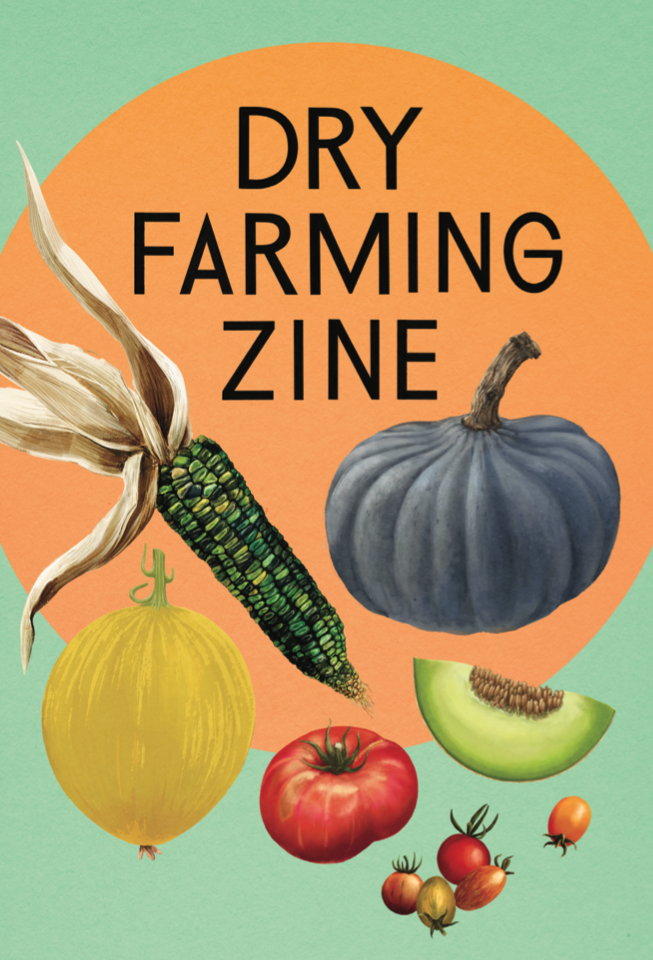
Dry Farming Zine
The Dry Farming zine was created to increase the understanding of dry farming, its roots, and application in the maritime Pacific Northwest of North America.
Intro to dry farming organic
vegetables in the maritime Pacific
Northwest
This OSU Extension publication provides an overview of dry farming in the maritime Pacific Northwest, describes management practices that support growing organic vegetable crops without supplemental irrigation in this region, and offers additional resources.
Note: This publication is currently under revision. We will update this resource when the new version is available.