
Case Studies from the West Coast
Farm-Tested Strategies from Across the Pacific Northwest
Growers across the West Coast are facing increasing water unpredictability — driven by climate change, prolonged drought, and shifting water policies. For small-scale and historically underserved farmers, limited access to funding, technical assistance, and water rights often means they must adapt with fewer resources. And yet, many are leading the way — developing low-cost, resource-efficient strategies out of necessity and ingenuity.
There’s no one-size-fits-all solution. Each grower operates within a mix of constraints — whether it’s limited irrigation access, challenging soils, or extreme weather. This diversity is what makes the stories of these six farms so valuable.

The Farms
In 2024, the Dry Farming Institute partnered with six farms across the Pacific Northwest to explore a range of water-resilient approaches tailored to each farm’s conditions. These case studies are our way of sharing their lessons learned with a broader community.
“Farming can be isolating. It was nice to feel supported — to know there are people you can reach out to when you need help.”
— Raptor Creek Farmers, Grants Pass, Oregon
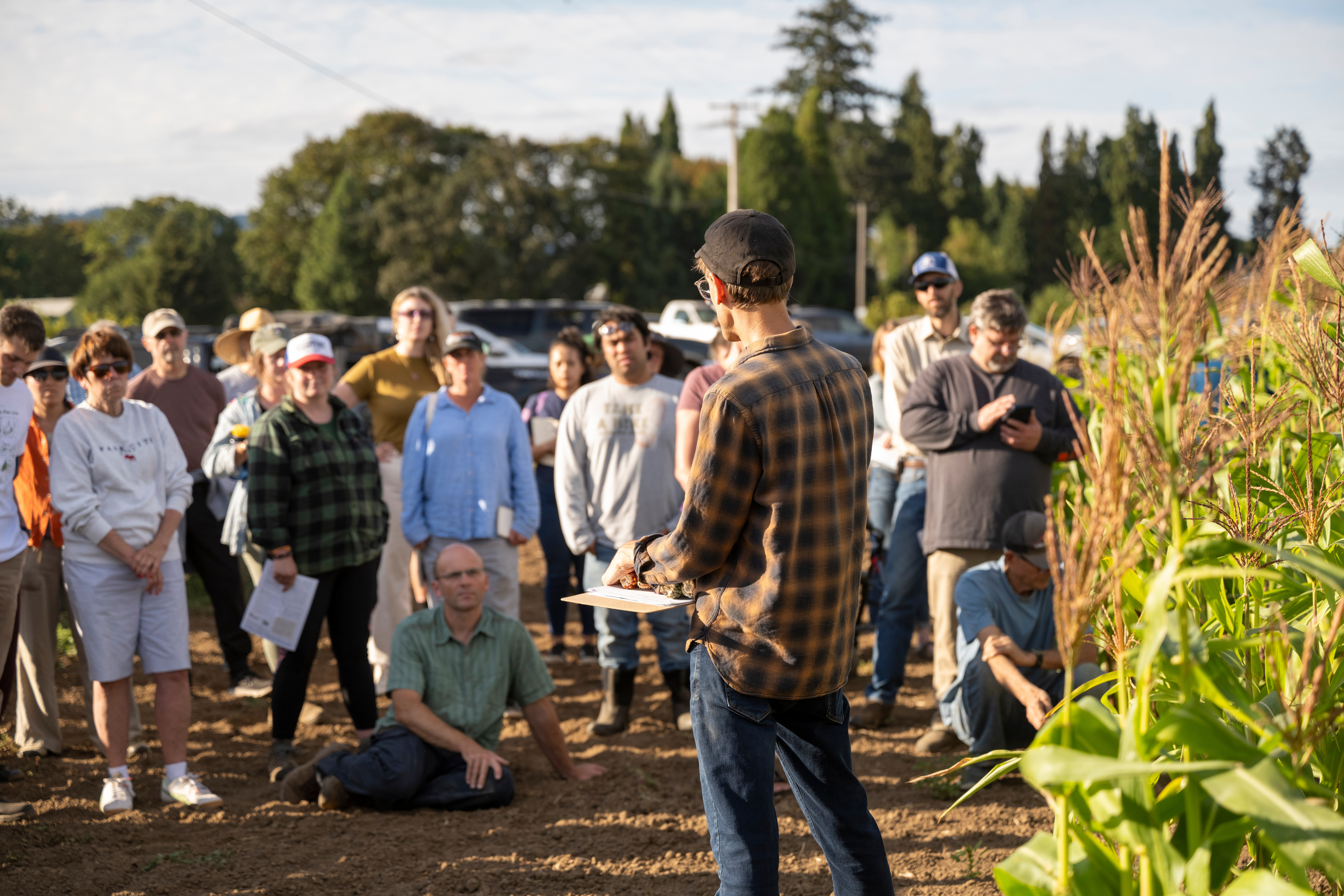
Corvallis, Oregon
Operating 8,000 square feet of leased Woodburn silt loam at OSU’s Oak Creek Center for Urban Horticulture, with 41.6 inches of annual rainfall, the OSU Dry Farming Program grows a diverse mix of annual vegetables, legumes, grains, and flowers alongside perennial kale, oilseeds, and legumes across 6.5 acres of educational grounds. This case study documents how a research and education center uses a small plot to generate practical, research-backed findings to inform dry farming practices. Essential reading for researchers, educators, and growers interested in the science behind the practice
Strategies Explored: Low and No-till Soil Management · Annual Crop Variety Trials · Summer Cover Cropping · Intercropping · Perennials
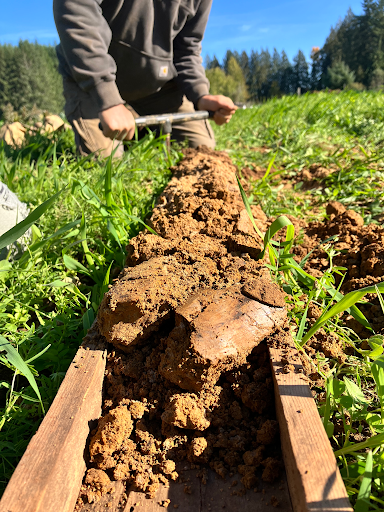
Kasama Farm at Headwaters Incubator Farm
Gresham, Oregon
Operating on just ¼ acre of leased silt loam soil at a farm incubator in Gresham, Kasama Farm reflects the reality for many beginning farmers, who work with limited space and shared infrastructure. They receive 48.9 inches of annual rainfall. This case study explores how water-resilient strategies like dry farming, intercropping, and organic mulching can be adapted for small-scale and incubator farm contexts. A valuable resource for beginning farmers and agricultural service providers working with emerging growers.
Strategies explored: Dry farming · Intercropping · Organic mulch
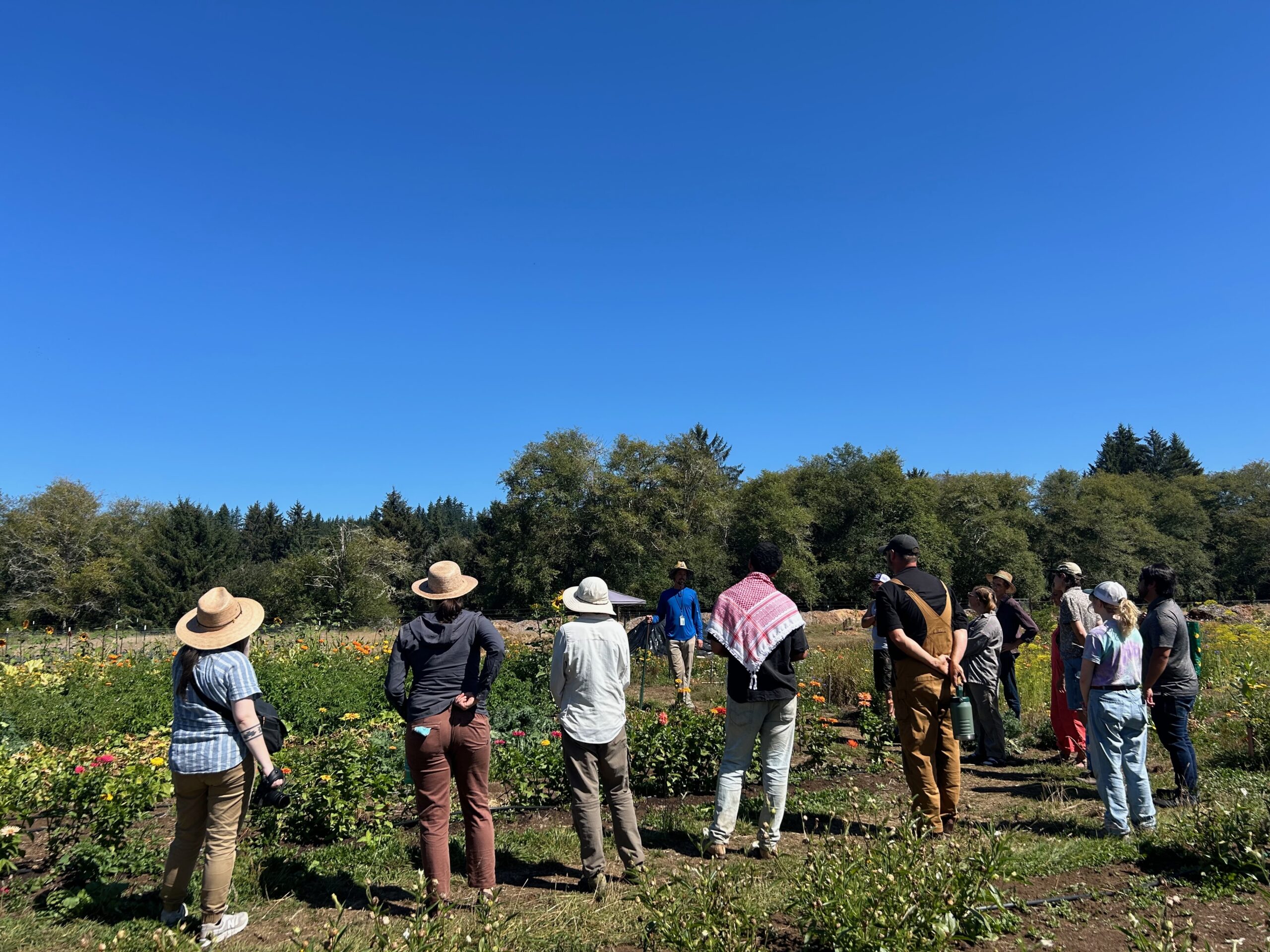
Logsden, Oregon
The Siletz Community Health Clinic’s Food Sovereignty Program operates and stewards a 38-acre diversified organic practicing farm in Logsden, farming Quillamook and Tillamook silt loam soils with 71.5 inches of annual rainfall. They provide healthy food, cultural opportunities, and community health services for Siletz Tribal members. Growing vegetables, herbs, flowers, berries, fruit, seed crops, first foods, native plants, and cultural materials, Tel-tvm’ embodies a holistic vision of land stewardship at the intersection of food sovereignty, cultural continuity, and community wellness. This case study offers a window into how this Indigenous community is applying data-driven, culturally grounded water-resilient strategies to land-based food production in service of present and future generations.
Strategies explored: Variety selection · Seed Saving · Data-Driven Irrigation · Reduced Tillage
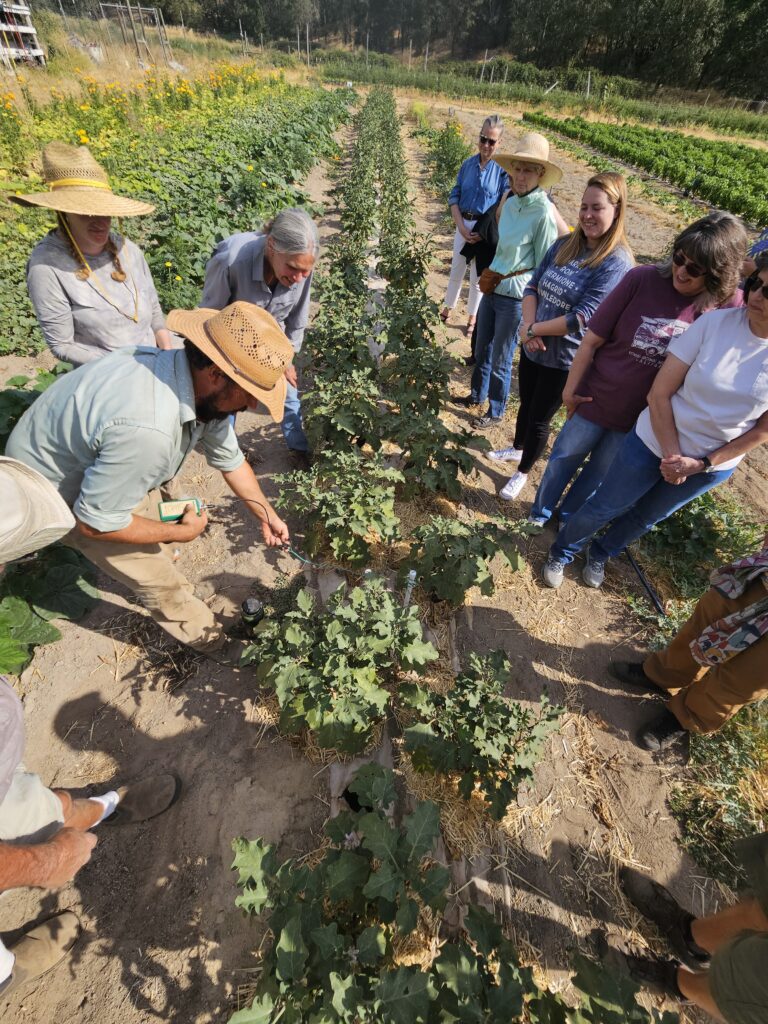
Raptor Creek Farm — Josephine County Food Bank,
Grants Pass, Oregon
Farming five acres of Barron sandy loam on a 40-year lease with the City of Grants Pass. With just 26.7 inches of annual rainfall, the lowest precipitation of any farm in this collection of case studies, Raptor Creek Farm operates as a production farm for the Josephine County Food Bank, growing vegetables, herbs, fruit, and perennials where water resilience is not just an environmental value but also contributes to food security for their community. This case study documents how a farm with a direct community hunger mission approaches water uncertainty with creativity and resourcefulness, exploring an unusually diverse toolkit of strategies. This case study is relevant to food bank farms, nonprofit growers, and anyone farming in low-precipitation environments.
Strategies explored: Data-driven Irrigation · Biochar · Mulching · Crop trials
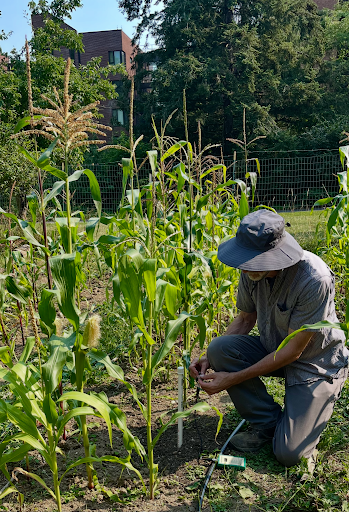
Outback Farm at Western Washington University,
Bellingham, Washington
Farming five acres of amended fill dirt over heavy clay, with 9 inches of available water holding capacity and 36.5 inches of annual rainfall, the Outback Farm at WWU operates within a protected wetland and university greenspace in Bellingham, Washington. This case study documents how an educational farm navigates water management where student learning and food production goals coexist. Particularly useful for campus farms, institutional growers, and educators integrating water resilience into their teaching practice.
Strategies explored: Mulching · Data-driven Irrigation · Crop Trials
The UW Farm at the University of Washington,
Seattle, Washington
Cultivating 2.5 acres of gravelly loamy sand amended with organic matter, with a notably low available water holding capacity of just 3-4 inches and 39.3 inches of annual rainfall. The UW Farm grows mixed vegetables, rye, fruit trees, cut flowers, wapato, and perennial herbs on a Memorandum of Understanding (MOU) with the university, which gets renewed every three years. This student farm in Seattle explores how water-resilient strategies translate to urban contexts with challenging soils and unique land tenure constraints. This case study may be of interest to campus farms, urban growers, and educators integrating water resilience into student learning.
Strategies explored: Mulching · Dry farming · Data-driven Irrigation · Cover Cropping
Farmers as Knowledge-Keepers
These case studies bring our Water Resilience Toolkit to life — illustrating real-world applications of the tools and strategies we’ve developed. These stories don’t just highlight practices; they celebrate the people behind them. Farmers are not just adopters of new ideas; they’re explorers and knowledge-keepers for their communities.
“80% of the time I was not right based on what I felt… It’s hot. I’m hot. But underground, it’s different.” — Tel-tvm’ Food Sovereignty Manager
The case studies are also part of a broader initiative to support farmer-led innovation. Based on lessons from these six farms and a decade of dry farming work in Oregon, we are developing the Water Resilience Toolkit, an adaptive, grower-centered guide to help others explore and adapt similar strategies on their own land.
COMING SOON: Learn More About the Water Resilience Toolkit →
Partners in Resilience
This project is a collaboration between:
- American Farmland Trust
- Dry Farming Institute
- Oregon State University Extension
- Washington Water Trust
- USDA California Climate Hub
- USDA Northwest Climate Hub
- Oregon Climate and Agriculture Network (OrCAN)
- Red Hill Soils
This project was supported by the USDA National Institute of Food and Agriculture’s Extension, Education, and USDA Climate Hubs Partnership program (Award #2023-67019-39349), focused on providing effective, translatable, and scalable approaches to address climate change through regional partnerships.