On-farm demonstrations, field days, and one-on-one support
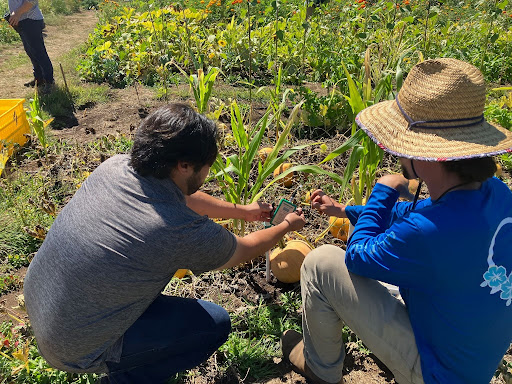
Tel-tvm’ Field Tour – Soil Moisture Monitoring. Read Tel-tvm’ Western Water Resilience Case Study (link opens a PDF) to learn more. Photo by Amy Garrett
BY THE END OF THIS ARTICLE, YOU WILL BE ABLE TO…
- Select a program delivery mode—on‑farm demonstration, field day, or one‑on‑one support—for your next gathering.
- Identify the key resources and preparation steps needed for that mode.
Gathering with other farmers, farmworkers, land stewards and other community members is an important part of sharing knowledge, experimenting with new practices, and can enable hands-on learning. Gatherings can happen when connected to in-person (and in some cases, virtual) on-farm demonstrations, field days, and other one-on-one interactions.
Most effective facilitators use all three methods at different moments in a community’s development and in response to what growers need. The resources below support each mode.
In the following articles, we highlight resources to help you convene your community of practice through on-farm demonstrations, field days, and one-on-one interactions. If you’ve chosen demonstrations, continue to Article 2; if field days, see Article 3; if one‑on‑one support, see Article 4.
BEFORE YOUR NEXT SESSION
Work through these prompts before meeting with growers or convening your group. They will help you choose the right delivery mode and prepare for meaningful conversations.
- Choose the right delivery mode. Which approach (demonstration, field day, or one‑on‑one) is the best next step for your community right now? Name one reason it fits your current context.
- Draw on the Water Resilience Case Studies. Have you reviewed the case studies? Which one is most relevant to farms in your region, and what insight or example would you bring into your next grower conversation?
- Identify potential host sites. Who in your network could host a demonstration or field day this season? Name one farm and one reason it would be a strong host site.
Carry forward: Your chosen delivery mode and a host farm or a grower for a site visit carry into Article 3, where you’ll identify how to resource the work.
RESOURCES
Sustainable Agriculture Through Sustainable Learning — — SARE guide to working with adult learners in agricultural contexts. Start here if you’re new to facilitating farmer learning.
Reaching Women in Agriculture — — SARE guide for virtual engagement with women farmers, with broadly applicable adult learning best practices
Creating Farmer Networks: A Toolkit for Promoting Vibrant Farm Communities — — This toolkit provides information and resources needed to create a successful farmer network. It is intended for farmers, extension agents, community organizers, and other agricultural professionals.