Stay connected, share what you’re learning, and contribute to what comes next
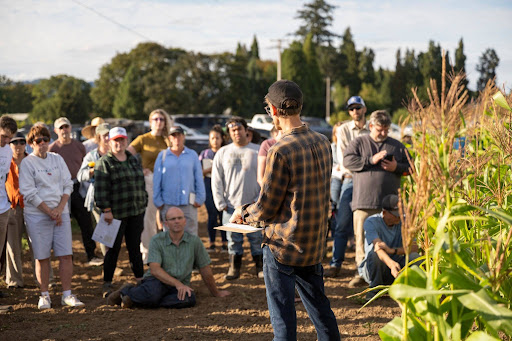
OSU Extension’s Lucas Nebert leads participants through dry-farmed plots at the 2024 Dry Farming Field Tour. Photo by Shawn Linehan.
BY THE END OF THIS ARTICLE, YOU WILL BE ABLE TO…
- Identify at least one network or community where you can stay connected to water resilience work.
- Name one way you will share what you’re learning with the broader DFI community.
- Locate where to go to contribute stories, resources, or questions back into this toolkit.
The most useful knowledge for navigating water scarcity often comes from sitting with another farmer or facilitator two counties over. This article is about finding those people and becoming one of them for someone else.
This guide is a living resource. What you discover through facilitation, what resonates with your community, what questions growers keep raising about what’s missing, will shape how this tool develops. You’re contributing to this body of knowledge by engaging with it! Share your learning with our team at info@dryfarming.org.
RESOURCES
Dry Farming Collaborative (links to Facebook) — — Currently (May 2026), the Dry Farming Collaborative engages through the Facebook group; join to connect with others doing this work.
Western Arid Growers Network — — Join the Western Arid Growers Network to connect with fellow farmers, research, and best practices for small-scale vegetable growing in challenging environments.
OSU Dry Farming Program — — Explore what OSU’s Dry Farming Program is up to.
OSU AgWater — — A tool for sharing articles, calculators, and tools for irrigators, water managers, and agricultural stakeholders.
Reach out to DFI (link opens an email) — — Share what your community is working on, contribute resources to this guide, or connect with the DFI team directly. You can also follow us on Instagram.