In a rapidly changing climate, community is everything.
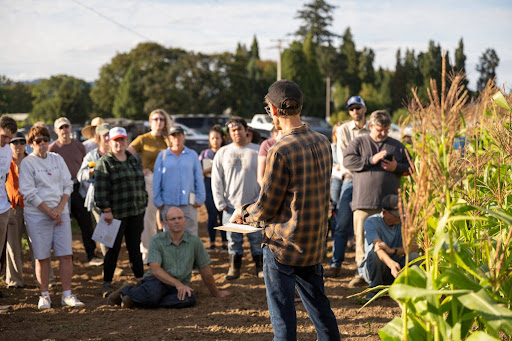
Photo by Shawn Linehan. Community gathered to learn and exchange knowledge at a dry farm field day in Corvallis
The Dry Farming Institute team just spent a few days in Bellingham, Washington, at the annual Washington Tilth Conference. This year’s focus was agricultural viability and the collective effort it takes for farmers to survive and thrive, and the sessions were both practical and inspiring. Our collaborator Jen Clark of Roots Farm in Poulsbo, Washington, spoke about her dry-farming experiments, with support from our Program Director, Amy Garrett, and Board Chair, Lucas Nebert. Over three days, we made new connections and strengthened old ones. We saw familiar themes emerge from those interactions: cooperation, collaboration, and community.
Listening to farmers who spoke at Tilth, I heard them speak eloquently about the power of community, especially in times of acute crisis. One described it this way, “community is everything…we would not survive without it.” As harvest season comes to an end and many of us gather in gratitude and reflection, I keep returning to that idea, and to why I am so committed to this work.
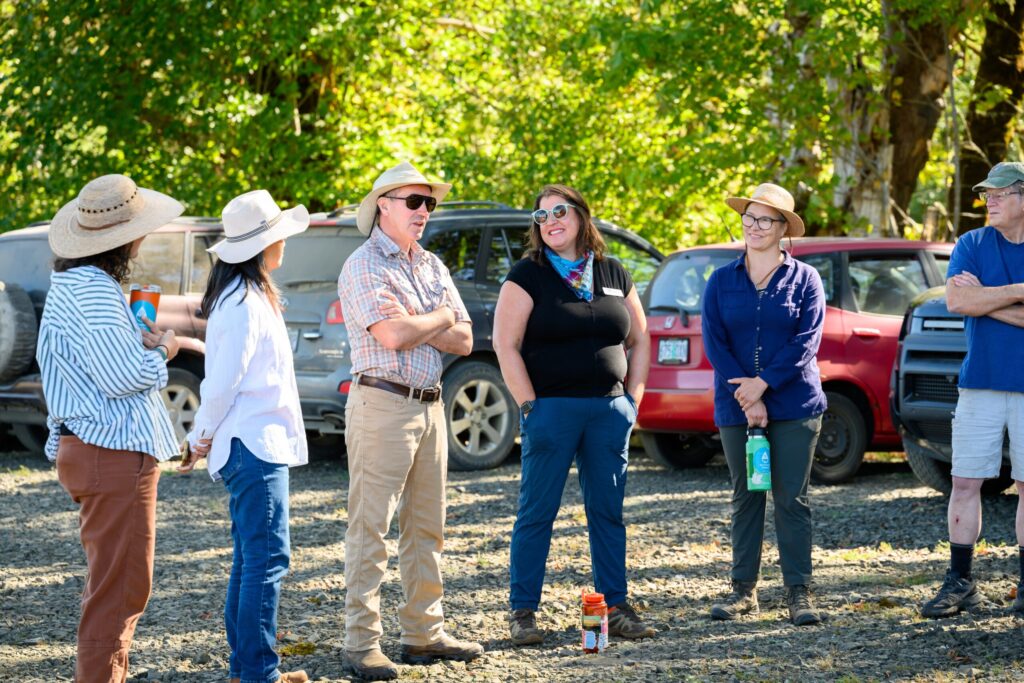
Community at the center
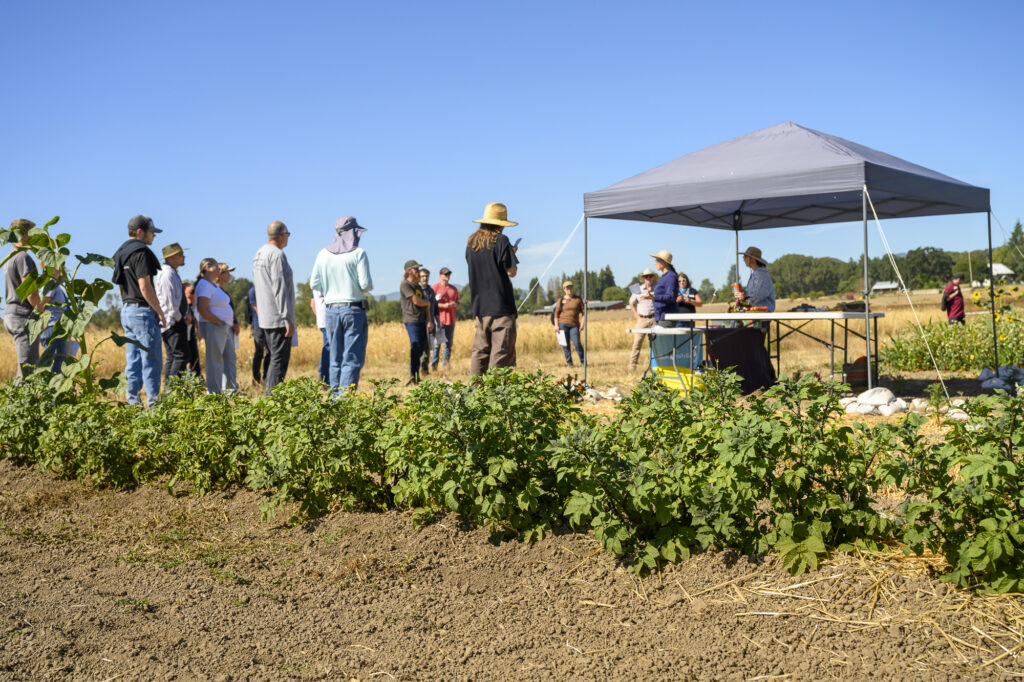
At the Dry Farming Institute, we support farmers not only to survive but to thrive as water scarcity becomes our new normal. At the center of that work is community. We strive to stay connected through listening and responding to what farmers tell us they need. Research is one of the tools we use to respond. Our Water Resilience Toolkit, for example, is an essential resource for farmers and service providers facing hotter, drier, and more variable seasons in the Pacific Northwest, developed from years of working alongside growers operating in these water-limited contexts. Those connections grow through conversations in the virtual Dry Farming Collaborative network and at in-person gatherings like our field tours and the annual Winter Convening (the next one is March 3rd—mark your calendars!).
A holistic approach
Fostering community also means supporting the people at the center of farms. That is why I am excited to build on our work with extension superstars like Maud Powell at OSU Extension, weaving climate stress and grief into our work on water resilience and dry farming. Water insecurity calls for more than technical assistance. It calls for holistic resources that address its social, economic, ecological, and emotional dimensions.
Learning from the 2026 snow drought
In the coming year, through a partnership with Oregon State University Research and Extension, we will explore how the 2026 snow drought affected farm and ranch production, and identify tools and resources to better support the agricultural community in preparing for and responding to drought.
If you would like to share your own experience with drought in an interview, email me gabrielle at dryfarming dot org to schedule a time to talk.
How we show up
Just as farmers need robust, relevant partners, including other farmers and agricultural service providers, so does DFI. We need a vibrant community of growers and collaborators across sectors, and a supportive network of donors and funders. Being in community is not only about what we ask of others; it is about how we show up for them. As I near ten months as Executive Director, I have been reflecting on what we offer the community we are part of and continue to serve.
As we continue this work:
- We are committed to providing practical, evidence-based tools and strategies for dry farming and water resilience, shared among farmers, service providers, and youth.
- We are committed to learning and experimenting on our own farm, so our work stays grounded in local knowledge of place and practice.
- We are committed to uplifting our collective stories, so we can meet water scarcity challenges together without reinventing the wheel.
- We are committed to resourcing the farmers and partners doing this important work.
- We remain committed to centering the relational over the transactional, equity and care over hierarchy and privilege, and knowledge exchange over knowledge extraction.
I hope you will stay engaged with me and our team, and help guide our work so it stays grounded in your dry farming and water resilience needs as we chart a path forward through uncertain and challenging times.
Gabrielle Roesch-McNally, Executive Director, Dry Farming Institute